Showing posts with label Audi. Show all posts

Audi Q7

The Audi Q7 is a full-size luxury crossover SUV unveiled in September 2005 at the Frankfurt Motor Show. Production of the Q7 began in autumn of 2005 in Bratislava, Slovakia. It is the first SUV offering from Audi. Later, Audi's second SUV, the Q5, was unveiled as a 2009 model. Audi has since unveiled a third SUV model, the Q3, going on sale in the 3rd quarter of 2011.The Q7 (internally designated Typ 4L) utilizes a modified version of the Volkswagen Group PL71 platform. Previewed by the Audi Pikes Peak quattro concept car, the Q7 is designed more for on-road use, and was not meant for serious off-road use where a transfer case is needed. In an off road test through the Australian outback it fared well for a "soft roader". Although it lacks a low-range transfer case, it has quattro permanent four wheel drive system with a central differential lock, and an adjustable-height air suspension which helps in off road situations.


Despite its multiple airbags and safety electronics, such as Electronic Stability Programme (ESP), the Q7 scored only four stars out of five in the Euro NCAP crash test for adult occupant protection. According to Audi, this was caused by a design error, and has since been fixed in cars manufactured after the test which should allegedly lead to five stars. Official tests to prove this remain to be done as of March 2009.

However in the United States, the Q7 received five out of five stars from the National Highway Traffic Safety Administration (NHTSA) safety test for both front and side impacts. The Insurance Institute for Highway Safety awarded the Q7 its Top Safety Pick, with Good ratings in all 14 measured categories of the front and side impact test.


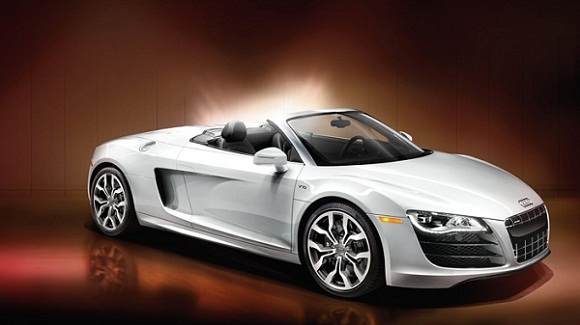
Audi's New 552bhp R8 GT Spyder unvealed

Audi has revealed this lightweight, high performance GT version of its R8 Spyder.

Power from its 5.2-litre V10 engine has been increased from 518bhp to 552bhp, and its 0-100kph time has been cut to 3.8sec. Its top speed is now 317kph. The R8 GT Spyder also gets a six-speed R tronic transmission as standard.

Audi has slashed 85kg from the all-wheel drive R8 Spyder’s kerb weight to 1640kg in the GT, mainly with the adoption of cabronfibre for some body panels, the modified front spoiler, fixed rear spoiler and new rear bumper.

Styling changes include add-on parts in titanium grey, a dual lip front splitter, a revised front bumper, red GT badges, round exhaust tailpipes, an enlarged rear diffuser and dark LED taillights behind clear glass.

The all-black interior is where the most drastic weight saving has taken place; the addition of new bucket seats saved 31.5kg on their own. Like the GT version of the coupe before it, production of the Audi R8 GT Spyder will be capped at 333 units.
FACTFILE>>>>>>


MOREPHOTOS>>>>>>>>>


that's it for now.............Drive safe make sure you wear your seat belts and please do not use high beams........

Audi Q3 2.0 TDI review, test drive (Diesel)


The Q3 is Audi’s brand-new baby soft-roader. It will be on sale in India in the second quarter of 2012 and will rival the BMW X1.
The Q3 is compact, measuring less than 4.4 metres from nose to tail, which makes it almost 250mm shorter than the Q5. With a wheelbase of 2603mm, it is 157mm less than the X1 too. The difference lies in the packaging. The Q3 is based on the same platform as the Volkswagen Tiguan, which means it has a transversely placed four-cylinder engines, and there is a front-wheel-drive version as well. India will get a 177hp 2.0-litre turbo-diesel and a 211hp 2.0-litre turbo-petrol, both mated to a seven-speed twin-clutch gearbox, powering all four wheels. 
On the move, the diesel, with its 38.7kgm of torque is responsive and shifts its 1585kg kerb weight well. Audi claims it will sprint to 100kph in 8.2sec and it certainly feels like it. In traffic, the motor is responsive but we did find it a tad noisy when it is worked hard.
The petrol on the other hand is very refined. Performance is strong and it pulls hard and smooth all the way from 3000rpm to its redline. It feels a world away from the 150bhp 2.0-litre petrol in the BMW X1.
As for its interiors, there are five doors and reasonably comfortable accommodation for four adults, provided the ones in the rear cabin aren’t particularly tall, and there is a reasonably sized boot as well.
The Q3 does have other virtues typical of a larger 4x4. Its raised driving position makes for easy entry and exit from the car, as well as for a relaxing elevated view of the road ahead; for good visibility to the sides and out of the rear of the car too.
The cars we drove had manual seat and steering adjust, but expect India cars to get powered options. Cabin quality is impressive and it is well-equipped as well. Our test car was appointed with a mix of black alcantara, leather seats and silver trim, which felt quite good.
Our test car was equipped with Audi’s adaptive dampers which you’ll find supple and compliant over rougher surfaces – provided you select the right Drive-Select mode. While the ‘Dynamic’ setting adds weight to the car’s steering and dials-in body control and stability for very testing roads, Audi’s ‘Comfort’ preset is the one you’ll default to. It allows for a smooth ride, enough to bear comparison with the most refined cars in its class. It can easily handle urban road scars without disturbing the calm of the Q3’s cabin and doesn’t sacrifice too much handling or steering precision at higher speeds. Also, the Q3’s Stronic gearbox is a smoother operating setting with which the car performs wafting part-throttle getaways without any of the unseemly rushing or shoving that twin clutch transmissions suffer with.
Audi plans to assemble the Q3 at its Aurangabad facility and it will be the cheapest Audi in India. It is compact, well-appointed, looks sharp and the very fact that it feels premium will no doubt make it popular here.

FACTFILE>>>>>>>>


Audi Q3 Commercial


Press Release - Audi Q3

The new Audi Q3 is a premium SUV in a compact form. This genuine Audi sets standards in all aspects of engineering – from its body through drivetrains and chassis to its state-of-the-art assistance systems and multimedia systems. The Audi Q3 is a versatile companion for everyday life – with an urbane character. The design of the Q3 is classic Audi: its coupe-like styling is one-of-a-kind among SUVs and symbolizes its sporty identity. Distinctive lights add a striking touch and the very flat-set rear window emphasize the sporty nature of the Audi Q3.

Thanks to systematic lightweight design, the basic version of the Audi Q3 weighs less than 1,500 kilograms (3,307 lb). Its engine hood and wraparound tailgate, which houses the taillights, are made of aluminum; the safe and solid passenger compartment features a great many ultra-high-strength steels. Its low drag coefficient of just 0.32 also enhances fuel efficiency considerably. The interior of Audi’s latest model is very roomy; its ergonomics and its workmanship are exemplary. Just as for the exterior, customers have many opportunities to express their very own style in the interior: Audi offers a wide selection of materials and colors. The luggage compartment offers 460 to 1,365 liters (16.24 to 48.2 cu ft) of capacity – ideal for sports and leisure.

Customers can opt to supplement the standard specification with numerous options straight from the luxury class. Examples include adaptive light technology for the xenon plus headlights, which ideally illuminates the road ahead – even around corners. And an enhanced parking assistant alerts the driver to obstacles, even if they are off to the side. Furthermore, Audi offers an entire set of infotainment components, spearheaded by the large MMI navigation plus – a hard drive navigation system – and the Bose surround sound system, with handsomely illuminated woofers up front. In the near future, an online Bluetooth car phone will follow, paired with a WLAN hotspot to provide the Q3 with full Internet connectivity.

 This compact premium SUV by Audi will roll off the assembly line with three different four-cylinder engines: one TDI and two TFSI units. All three will combine direct injection with turbocharging, and will feature not only an energy recovery system but also a start-stop system. With power outputs ranging from 103 kW (140 hp) to 155 kW (211 hp), these engines will be as efficient as they are powerful. The basic version, the Q3 2.0 TDI, is scheduled to appear a little later and – with 103 kW (140 hp) and front-wheel drive – will average less than 5.2 liters of fuel per 100 kilometers (45.23 US mpg).

The most powerful gasoline engine and diesel engine, respectively, will be paired with quattro permanent all-wheel drive and a seven-speed S tronic, which switches gears at lightning speed. And the S tronic features an innovation: during coasting, the dual-clutch transmission disengages the clutch and allows the Q3 to roll freely – provided that the driver has selected efficiency mode in the optional Audi drive select system. This measure also boosts fuel efficiency. Drivers can use the four modes of Audi drive select to have various systems adjust to their individual driving style; these include engine management and the optional adaptive dampers. The chassis of the Q3 – featuring a four-link rear suspension, electromechanical power steering, and robust wheel brakes – is the fruit of great design labor. The hold assist function is an available option; down the road, the hill hold assist system will be made available.
The Audi Q3 will go on sale in June. Its basic price in Germany will be 29,900 euros.

Audi is venturing into a new market segment: The Audi Q3 is a premium SUV in a compact form. It is sporty and efficient as well as versatile and trendy – a vehicle which feels right at home on or off any road. The Q3 showcases Audi’s expertise in all aspects of engineering: from its lightweight body through strong and efficient drivetrains and a dynamic chassis to its state-of-the-art assistance systems and multimedia systems. Many of its features are straight from the luxury class. The Audi Q3 features the sportiest and most progressive design in its segment. The single-frame grille with its tapered upper corners dominates the front; its outline is extended by the dynamic curve of the engine hood. The wedge-shaped headlights are available as a xenon plus version including LED daytime running lights. Large air inlets hint at the potential of the engines.

Viewed from the side, the Q3 similarly exhibits Audi’s classic design characteristics. The tornado line divides the side underneath the windows. The dynamic line imparts additional flourishes near the side sills and the wheel arches have a muscular look. Metal constitutes two thirds of the vehicle’s exterior; the greenhouse the remaining third. The roof line slopes markedly toward the ground; the D-posts resemble those of a coupe. Despite its coupe-like styling, the Audi Q3 is clearly recognizable as a member of the Q family. Its wraparound tailgate is similar in design to those on its larger siblings, the Q5 and Q7. In conjunction with the xenon plus headlights, LED light strips serve as tail lights. The exhaust system’s tailpipes terminate to the left and to the right. The Audi Q3 is 4.39 meters in length (14.4 ft), 1.83 meters in width (6.0 ft), and 1.60 meters (5.25 ft) in height – roof rail included. Its drag coefficient of 0.32 raises the bar in this segment; moreover, its underbody fairing facilitates optimum airflow – underneath the vehicle, too.

Audi offers twelve different colors of paint for its new compact SUV, and five customization options are available regarding add-on parts. In addition to the standard black add-on parts, customers can choose either a full paint finish or color-contrasting add-on parts in anthracite gray for the underbody guard and wheel arches. The Audi exclusive off-road styling package gives the Q3 a broad and powerful look. The S line exterior package, conversely, represents classic Audi and appeals to especially sporty customers. This compact SUV’s body is very rigid and impact-resistant yet quiet on the road. The passenger cell incorporates a great many tailored blanks as well as extremely strong hot-formed steel. These components are quite thin, which reduces the vehicle’s weight. The tailgate and the engine hood of the Audi Q3 are made of aluminum. The front-wheel drive version of Audi’s latest model weighs less than 1,500 kilograms (3,307 lb).

The roomy interior of the Audi Q3 harmoniously mirrors the exterior design’s sinewy yet gentle styling. A large curve, known as a wrap-around, encapsulates the driver and the front-seat passenger – a feature familiar from the brand’s large model lines. The dashboard’s horizontal layout underscores its width. An optional color display (as large as seven inches diagonally) on the instrument panel is a first in the Q series. Workmanship of uncompromising quality is every bit a matter of pride at Audi as is stylistic confidence in the selection of colors and materials. Five color concepts are available for the interior: black, gray, beige, and two shades of brown. With regard to upholstery, there are three fabric designs and three leather designs. For the inlays, there are four optional versions – including open-pored larch inlays and new silvery aluminum inlays with supplementary wire mesh and a 3D look. The S line sports package offers an additional inlay and bathes the entire interior in a cool black color.
Operating the Audi Q3 entails straightforward logic and intuitive user-friendliness – typical Audi. It is simple to read the instruments at a glance; the seats provide outstanding support and comfort. The chorus sound system with an AUX-IN input is standard, as are an air conditioner and an extensive array of occupant restraint systems.

Numerous high-end options attest to the excellent technological standards of the Q3. They include an on-board computer with efficiency program, an ambient lighting package with a great many LEDs, a panoramic glass roof, a storage package, sports seats, electrically adjustable and heated seats, a convenience key for entering the vehicle and starting the engine at the touch of a button, two-zone deluxe automatic air conditioning, tinted rear windows, and a three-spoke leather steering wheel in a new Q-specific look. Adaptive light technology for the xenon plus headlights and the high-beam assistant intelligently illuminate the dark road ahead. The Audi Q3 has a luggage compartment that offers plenty of room for recreational and sports equipment. Its 460-liter (16.24 cu ft) capacity swells to a volume of 1,365 liters (48.2 cu ft) with the split rear seat backrests folded down. A roof rail is standard. A wealth of options make driving this compact SUV even better. Among them: a luggage compartment package, a front-passenger seat with a folding seat back, a reversible loadliner, a reversible mat, a loading-sill protector made of stainless steel, a load-through hatch in the rear seat backrest, and a ski bag. The Audi Q3 can tow a trailer weighing as much as 2.0 metric tons (4,400 lb).

The Audi Q3 will be available with one of four engines. Upon its market launch, two gasoline engines and one TDI engine will be offered; a second TDI engine will appear a little later. All four of the four-cylinder engines will have a displacement of 2.0 liters. They all deliver great output and terrific torque from 280 to 380 Nm (206.52 to 280.27 lb-ft). In addition, all engines combine Audi’s mighty efficiency technologies: direct fuel injection, turbocharging, the start-stop system, and the energy recovery system. The 2.0 TFSI delivers either 125 kW (170 hp) or 155 kW (211 hp). The more powerful version propels the Q3 from zero to 100 km/h (62.14 mph) in 6.9 seconds and on up to a top speed of 230 km/h (142.92 mph). The 2.0 TDI is available with 130 kW (177 hp); a version with 103 kW (140 hp) is to come a little later. Paired with front-wheel drive, the version offering 103 kW (140 hp) averages less than 5.2 liters of fuel per 100 kilometers (45.23 US mpg).

Both TFSI engines and the stronger of the TDI units will be supplied with quattro permanent all-wheel drive. Its key element is a hydraulic multi-plate clutch, which redistributes power at lightning speed from the front axle to the rear axle as needed. The Q3 2.0 TDI with 103 kW (140 hp) will roll off the assembly line with front-wheel drive and – just like the Q3 2.0 TFSI quattro with 125 kW (170 hp) – with a six-speed manual transmission. The 130 kW (177 hp) TDI engine and the 155 kW (211 hp) TFSI combine quattro drive with a dynamic seven-speed S tronic. Gears can also be shifted via optional paddles on the steering wheel. When a driver selects efficiency mode in Audi drive select, the S tronic disengages a clutch while the sporty SUV is coasting and allows it to roll freely – which further enhances fuel efficiency.

The sportiest player in this segment, the Audi Q3 has a chassis that combines outstanding safety with excellent comfort and is well-balanced and harmonious. Its four-link rear suspension handles longitudinal and lateral forces separately. The electromechanical power steering performs responsively, precisely and very efficiently; the electromechanical parking brake boosts convenience. Audi drive select is available as an option for all Q3 engine types. It accesses the accelerator and steering. When ordered with the equipment options S tronic, adaptive light and Audi adaptive cruise control, these are influenced, too. The driver can vary the function of these systems between the comfort, auto, dynamic and efficiency modes. In efficiency mode, the air conditioner and cruise control operate with the specific aim of saving fuel.

 The Audi Q3 leaves the factory with 16-inch lightweight alloy wheels fitted with 215/65 tires; the top-of-the-line engines are available with 17-inch wheels. Upon request, Audi can supply wheels between 17 and 19 inches, some of which are quattro GmbH products. All tires are distinguished by low rolling resistance; the brakes are strong and stable – and ventilated at the front. Thanks to its generous ground clearance of 17 centimeters (6.69 in), the Q3 can also tackle rough terrain.
In the Audi Q3, the electronic stabilization program (ESP) integrates an electronic differential lock, which – at the vehicle’s cornering limit – regulates the distribution of drive torques to the wheels via minor, barely perceptible braking. Regardless of version, the ESP offers trailer stabilization. Upon request, Audi will supply the Q3 with the hold assist function; at a later time, a hill hold assist system will maintain a constant vehicle speed while driving downhill.

Audi will provide a full range of infotainment technologies for the Q3. The connectivity package, for instance, includes the Audi music interface for integrating mobile playback devices and a GPS interface, which the customer can activate at once or at a later date. Many additional solutions are taken straight from the luxury class. For example, the Bose surround sound system integrates 14 speakers, and the woofers up front illuminate handsomely when the interior darkens. The high-end infotainment cornerstone is the large MMI plus, a hard drive navigation system. Its manually extendable seven-inch color screen displays high-resolution 3D images; the system can also process whole-word voice input.

At a later date, it will become possible to link the MMI navigation plus system with the online Bluetooth car phone, which integrates a UMTS module. And thanks to Audi connect, the Internet will be on board the Q3 – including special services. A WLAN hotspot enables mobile terminal devices so that passengers can enjoy unrestricted Internet connectivity on the road. With the online Bluetooth car phone, a route chosen by the driver can be portrayed on a Google Earth map. Audi’s online traffic information keeps drivers abreast of the traffic situation ahead. Information is up-to-the-minute and precise because data is generated from a great many vehicles.

Assistance systems for the Q3 also come from higher-end model lines. Audi side assist employs radar to help drivers change lanes and Audi active lane assist helps drivers remain in their lane by slightly correcting steering, if necessary. The optional driver information system’s screen shows important road signs thanks to the camera-based speed limit display. No less than five systems are ready to help drivers park. The park assist system does the steering for drivers while the vehicle is reversing into right-angle or parallel spaces; if necessary, it will execute several steering steps. Its twelve ultrasonic sensors detect obstacles such as concrete pillars, even if they are off to the vehicle’s side. The assistant’s software memorizes the obstacles’ locations and alerts the driver to them before the parking space is vacated. The Audi Q3 – which will roll off the assembly line in Martorell, Spain near Barcelona – will go on sale in June. The basic price in Germany for the basic version will be 29,900 euros.

Audi A7 Sportback 3.0 TDI review, test drive


The A7 turns heads. Everywhere. You would think that the metallic beige Audi isn’t unique enough to catch the jaded Mumbaikar’s eye, but that’s just what it does. Credit goes to its low, brooding stance and slit eyed headlamps, but where the A7 is racier than the regular German executive cars is with its Mustang-like fastback rear. We think it looks fantastic and other road users seem to unanimously agree.
We like what’s under the skin too. The A7 shares its innards with the A6 and, indeed, the A4 and A8, all these models using Audi’s MLB platform. It may look like a coupé, but the car occupies quite a bit of real estate. At a shade under five metres long and almost two metres wide, it is longer and wider than an A6, but smaller than an A8.
And, like its siblings, the engine is longitudinally mounted and sends power to all four wheels. Audi’s tried and tested 3.0 V6 diesel motor has been improved for the A7 by using higher injection pressures, new camshaft profiles and a revised turbo. As with most Audi Quattro systems, this one sends 60 percent of its power to the rear axle. Suspension is by way of double wishbones up front and a multi-link setup at the rear with Audi’s adaptive air suspension taking care of damping. A lot of the body is aluminium, including the front suspension struts, so this car weighs in a rather light 1770kg (for its size). The 54/46 front/rear weight distribution is impressive too.
This is a long, low car, and it feels that way when you get in. You stoop to enter, and sit a lot lower than in conventional saloons of this size, but it’s a comfortable place once inside. We liked the interior’s craftsmanship and trimmings that make it feel quite special. The swooping dashboard and door inserts, the precision machining of the aluminium centre console controls and the showy arrival of the MMI system’s screen that rises out from a slot in the dash, all create an alluring first impression.
At the rear, the fastback roofline will scuff the scalps of taller people, and sitting three abreast is a bit of a squeeze. Legroom isn’t bad but what makes it a tad uncomfortable is the upright seat back. The underlying message here is don’t buy this car if the rear seat is a priority. The boot is reasonably spacious and though it’s a bit shallow, it makes up with its length and you can split and fold the rear seats for a bigger load area.
There’s no stinting on equipment. Standard features include adaptive air suspension, two-zone climate control, a fuel saving start-stop system, Audi’s Multi-Media Interface, a parking system with a reverse camera, and 18-inch alloy wheels. The options list is quite long too, so you can really spec it up. But, as with all Audis, the spare tyre is a space saver.

Drive it, and you’ll see the A7 is much more than just a looker. Press the engine start button and the 245bhp, 3.0-litre V6 diesel starts and settles into a beautifully refined idle. The strong point of this engine is the way it makes its 51kgm of torque. It peaks at a low 1400rpm and stays there all the way to 3250rpm. Keep the engine spinning in this range (easy to do via the seven-speed, twin-clutch auto) and you’ll find a car that is rapid in its responses. Flat out, it moves off with convincing urge and performance is befitting of its sporty looks – 100kph comes up in a very rapid 6.6sec and 200kph comes up in under half a minute. The engine is incredibly smooth and refined for the most part, and gets audible only when nearing its redline.
If there is a slight hiccup with the powertrain, it’s that the transmission occasionally hesitates when you want to kick-down. Using the paddleshifts cures this problem, so it is best to do so when you want a quick overtake. 
Adding to the car’s relaxed highway manners is the tall seventh gear which gives it long legs. It’s a shame then that there is so much tyre roar in the cabin, especially over concrete roads. It’s the one thing that stops it from being as relaxed a tourer as some of its German rivals.
Around town, the low driving position can be a bit intimidating at first, but you get used to it. That big rear window really makes it easy to see out the back though. It has a genuinely comfortable and pliant ride despite the big wheels and the low-profile rubber. With the adaptive air suspension in comfort mode, it absorbs bumps well and we love the way it dispatches bumps and expansion joints with solid thunks. The comfort setting does allow the car to wallow ever so slightly over undulations and small bumps do tend to catch it out but this isn’t too bad. Ground clearance isn’t as bad as we expected either – simply raise the car on its suspension and it’ll climb over most speedbreakers.
Audi’s drive select system (standard on the A7) lets you tailor everything from engine responsiveness, steering weight, suspension setting and even seatbelt pre-tensioning. Select the dynamic mode and the steering weights up a bit more and you can feel the suspension tightly controlling body movements. Around corners, the A7 displays phenomenal grip and fantastic body control and is quite fun to drive on a twisting road. The electrically assisted steering is a big letdown though – it feels too inert, lifeless and vague. If not for the desensitised steering, the A7 would have been quite a hoot to drive.
The A7 costs Rs 64 lakh (ex-showroom Delhi) which means it sits exactly between the A6 and the A8 on price. It is expensive but that’s the price you pay for style. The A7’s looks, drivetrain and equipment are all compelling reasons to buy one.  It rides well, is very refined and is a lot more practical than its shape would suggest. Sweet chariot it is.


Fact file............................

that's it for now.............Drive safe make sure you wear your seat belts and please do not use high beams........

Audi TT

Dynamic design, enthralling performance and exemplary efficiency – the Audi TT Coupe and the TT Roadster are now more attractive than ever. The design of the lightweight bodies made primarily of aluminum and the interior have been revised with great attention to detail, while new technologies lower the fuel consumption of the compact sports car. New to the lineup is a powerful and highly efficient four cylinder: The 2.0 TFSI develops 155 kW (211 hp), but is content with an average fuel consumption of just 6.6 liters per 100 kilometers (35.64 US mpg).

Audi TT
Exterior design
The second generation TT Coupe and the TT Roadster have made a name for themselves as design icons, similar to their predecessors. Awards such as the 2007 “World Car Design of the Year” document this status. A brawny, broad foundation, powerful shoulders and a flat roofline – the two compact sports cars have fascinatingly masculine lines. Their dynamic appearance is now even more expressive than ever.
The most obvious feature at the front of the car is the powerful bumper, which frames the larger air inlets with three-dimensional, sharply drawn out edges. The fog lights are set in chrome rings. Also sporting a new look are the lattice of the single-frame grille in high-gloss black and the optional xenon plus headlights. Twelve white LEDs arranged in a straight line at the lower edge of the headlights serve as the daytime running lights. These together with the wings in the headlight body are classic Audi design features.

The tubular, apparently floating reflectors of the tail lights add visual depth to the rear end of the car. The large tailpipes of the exhaust system – the 2.0 TFSI features a dual exhaust – and the larger, flat black diffuser set additional accents. A spoiler that extends at 120 km/h (74.56 mph) improves downforce.
The upgrades to the TT Coupe and the TT Roadster have added two centimeters (0.79 in) to both cars, which now measure 4,187 millimeters (13.74 ft) in length. The width of 1,842 millimeters (6.04 ft) and the height of 1,352 millimeters (4.44 ft) and 1,357 millimeters (4.45 ft) for the Coupe and Roadster, respectively, remain unchanged. The wheelbase measures 2,468 millimeters (8.10 ft). Four new metallic colors have been added to the TT color range: Scuba Blue, Oolong Gray, Volcano Red and Dakota Gray. Daytona Gray, pearl effect is also available with the S line package.


Body
A key factor for the groundbreaking efficiency and excellent driving dynamics of the TT is the body, which features hybrid Audi Space Frame technology (ASF). Lightweight aluminum is used at the front of the car back to the B-pillar, with steel panels used at the rear. This mix enabled the development engineers to balance the axial loads perfectly and keep the total weight extremely low – prime parameters for dynamic performance.

The TT 1.8 TFSI weighs a mere 1,240 kg (2,733.73 lb), a good 100 kilograms (220.46 lbs) less than its closest competitor. The body of the Coupés weighs only 206 kilograms (454.15 lb), which breaks down to 140 kilograms (308.65 lb) of aluminum (68 percent) and 66 kilograms (145.51 lb) of steel (32 percent). The specific reinforcements in the TT Roadster – steel bulkhead, strongly ribbed sills, A-pillar and windshield frame – result in a 58 to 42 percent split of the two materials.

The ASF bodies of the TT are not only extremely lightweight, they are also very strong and low-vibration, providing the foundation for sporty and precise handling, the quiet ride and the high passive safety. A package of finely tuned retention systems protects the passengers in the event of a crash. The classic cloth top of the TT Roadster is a perfect complement to Audi’s lightweight construction principle. It contributes to a low center of gravity, fits ideally into the design line and takes up little space when folded.
Audi offers the soft top in two variants. The manual version features a central latch for opening and closing the top. An electrohydraulic drive opens the optional fully-automatic top in just 12 seconds, even while driving at speeds up to 50 km/h (31.07 mph). An additional acoustic mat further improves the already excellent acoustics and thermal insulation.
Interior
The interior of the TT features a sporty design, dynamic elegance and generous amounts of space. The standard sport seats are mounted low and offer a high level of lateral support. The steering wheel is flattened at the bottom. The five round air vents and the arched cowl over the round-dial instruments exude the spirit characteristic of the TT. The ergonomics are logical and the fit and finish is uncompromisingly precise – just like always with Audi. When the ignition is turned, the dials of the speedometer and tachometer briefly run up to the limit before returning to zero.

The designers have added additional gloss to the fine interior. New aluminum-look applications shine on the steering wheel, the center console and in the door liner. Elegant accents are provided by rings, frames and strips in high-gloss black. The aluminum strip above the glove box door is now brushed gray. There are three new interior colors from which to choose – nougat brown, titanium gray and garnet red. The leather seat covers are specially treated to reduce thermal heating by as much as 20 degrees Celsius (68° F) when the TT is parked in the sun.
The TT Coupe and the TT Roadster are sports cars with a high degree of everyday utility. The backs of both rear seats fold down in the 2+2-seater Coupé, expanding the trunk space beneath the long lid from 292 to 700 liters (10.31 – 24.72 cubic ft). The Roadster, which offers 250 liters (8.83 cubic ft) of storage space whether the top is up or down, can also be supplied with the option of a load-through facility.

Drivetrain
Three four-cylinder engines with turbocharging and direct fuel injection are available for both the TT Coupe and the TT Roadster. The two TFSI gasoline engines and the TDI combine sporty performance with groundbreaking efficiency – their fuel consumption figures have been reduced by up to 14 percent. All three engines are coupled with a recuperation system that recovers energy during braking and coasting phases.
New to the lineup is the 2.0 TFSI with 155 kW (211 hp), which replaces the 2.0 TFSI with 147 kW (200 hp) and the 3.2 FSI. With a manual transmission, the two-liter engine accelerates the Coupe from zero to 100 km/h (62.14 mph) in 6.1 seconds on its way to a top speed of 245 km/h (152.24 mph). Audi also offers the 2.0 TFSI with an optional drivetrain featuring the six-speed S tronic and quattro permanent all-wheel drive. The spring from zero to 100 km/h (62.14 mph) takes only 5.6 s in this configuration.

The Audi valvelift system AVS in the new 2.0 TFSI increases power, torque and efficiency. Equipped with a manual transmission, the TT 2.0 TFSI consumes only 6.6 liters of fuel per 100 km (35.64 US mpg) in the European test cycle. CO2 emissions are an exemplary 154 grams/km (247.84 g/mile). The best value posted by a competitor is 199 g/km (320.26 g/mile). Fuel consumption has improved by 1.1 liters/100 km over the previous model.

The 2.0 TFSI is a winner par excellence, having been named “Engine of the Year” five years in a row by an international jury. Its technology package combines high output with impressive pulling power. A constant 350 Nm (258.15 lb-ft) of torque are available between 1,600 and 4,200 rpm. The long-stroke engine, which is extremely cultivated thanks to two balance shafts, has been painstakingly optimized for minimal friction.
The Audi valvelift system adjusts the lift of the exhaust valves in two stages depending on need. This reduces flushing losses in the combustion chamber and also ensures that the optimal flow of the exhaust gas is directed to the turbocharger, which in turn ensures that torque is developed quickly.
The combination of turbocharging and direct fuel injection also reduces the combustion chamber temperatures and the resulting tendency to knock. This allows a high compression ratio of 9.6:1, which improves efficiency.
The TT engine lineup includes two other four-cylinder engines besides the new 2.0 TFSI. The 1.8 TFSI, available with a six-speed manual transmission and front-wheel drive, delivers 118 kW (160 hp) and 250 Nm of torque (184.39 lb-ft), the latter between 1,500 and 4,500 rpm. It launches the Coupe from a standing start to 100 km/h in 7.2 seconds, with a top speed of 226 km/h (140.43 mph). It consumes just 6.4 liters of fuel per 100 km (36.75 US mpg) on average, which corresponds to only 149 grams of CO2/km (239.79 g/mile). The TT 2.0 TDI remains the only sports car with a diesel engine in its segment, and its efficiency clearly sets the standard. The TT Coupe consumes just 5.3 liters of fuel per 100 km (44.38 US mpg), which corresponds to only 139 grams of CO2/km (223.70 g/mile). With 125 kW (170 hp) and 350 Nm (258.15 lb-ft) of torque – the latter available between 1,750 and 2,500 rpm – the standard sprint takes 7.5 seconds and acceleration continues until a top speed of 226 km/h (140.43 mph) is reached. The two-liter TDI is mated to a manual transmission and quattro all-wheel drive.

A precisely shifting six-speed manual transmission transfers power to the wheels regardless of the engine. Audi also offers the S tronic dual clutch transmission as an option for the new 2.0 TFSI. This transmission switches between its six gears with virtually no interruption to the supply of power. The high-tech gearbox shifts extremely quickly and comfortably, either fully automatically or manually as the driver desires. Manual shifts can be made using the optional paddles on the steering wheel.
The quattro permanent all-wheel drive system is available as an option for the 2.0 TFSI with the S tronic; it comes standard with the 2.0 TDI. The hydraulic multi-plate clutch, which is mounted on the rear axle in the interest of weight distribution, is electronically controlled. During normal driving, it sends most of the engine’s power to the front wheels, but can quickly transfer up to 100 percent to the rear wheels, if necessary.
The quattro drive provides substantially greater stability, traction and driving enjoyment, and is another unique selling point of the Audi TT in its class.

Chassis
The front suspension features McPherson struts, with aluminum components used to keep the weight of the unsprung masses low. The power steering is direct, sensitive and thanks to its electromechanical drive, highly efficient. The trailing arms of the four-link rear suspension are relatively soft in the interest of comfort. The connections to the three transverse links per wheel, on the other hand, are rigid in order to direct lateral forces into the body with precision.
Available as an option with all variants of the TT is the electronically controlled Audi magnetic ride shock absorber system, another high-tech feature that underscores the unique character of the compact sports car. A fluid containing tiny magnetic particles circulates through the dampers. When a voltage is applied to the magnetic field, the behavior of the particles changes and thus the damping behavior of the fluid changes. A computer fed with input from a bundle of sensors controls the adaptive damping.

The driver can choose between two base characteristics, which are now even more clearly differentiated. In “Normal” mode, the movements of the TT Coupe and the TT Roadster are balanced – equally agile and comfortable. In “Sport” mode, high damping forces largely suppress body roll. The TT is tautly connected to the road, and its setup is highly dynamic.

Another option is available in addition to Audi magnetic ride – the Sport button. The driver can use it to adjust the characteristic of the gas pedal (with manual transmissions), the amount of servo boost for the steering and the engine sound in two stages.
The range of wheels has also been reworked, and now features 14 variants. The TT 1.8 TFSI, the 2.0 TDI and the 2.0 TFSI roll off the assembly line on 17-inch aluminum wheels with size 245/55 tires.
Winter wheels are available in three sizes; the range of summer wheels extends all the way up to 9 J x 19 with size 255/35 tires. Mounted behind the large wheels are powerful brakes with large-diameter discs. The front discs are internally ventilated.

Equipment and trim
All versions of the TT Coupe and TT Roadster come with a rich array of standard equipment. Among the highlights are the “chorus” audio system, a driver information system and – in the TT Coupe– an automatic climate control system. Two navigation systems, a universal cellular phone preparation and the sonorous Bose Surround Sound system are available as options. The optional xenon plus headlights can be combined with a cornering light function.
The onboard computer with efficiency program comes standard in the TT. It displays all of the consumption-relevant data on the central display, and gives the driver tips for efficient driving. The gear-change indicator indicates the proper gear. Another function provides information on which vehicle systems, such as the climate control system, are consuming energy and how that effects fuel consumption.

Customizing fans will find a rich selection available in Color & Trim. It begins with the optional leather upholstery and includes four leather packages, an application package and two S line packages. The S line exterior package focuses on design modifications in the area of the bumpers, the air inlets and the diffuser. The S line sport package features a black interior with many fine details in such places as the steering wheel, the seat covers and the applications. 18-inch wheels and body lowered by 10 millimeters (0.39 in) make the handling even more dynamic.
The updated TT Coupe and the TT Roadster will debut on the German market this summer with only minimal changes in price. The 1.8 TFSI will be available from €30,200.

The Audi TTS and the Audi TT RS
The Audi TTS, both in Coupe and Roadster body styles, combine enthralling sportiness with cultivated comfort. Its two-liter TFSI with the large turbocharger and many additional modifications pumps out 200 kW (272 hp) and 350 Nm (258.15 lb-ft) of torque, the latter from 2,500 to 5,000 rpm. It accelerates the TTS Coupe with the optional S tronic from zero to 100 km/h (62.14 mph) in 5.2 seconds, up to a governed top speed of 250 km/h (155.34 mph). With the S tronic, the Coupé consumes an average of only 7.7 liters of fuel per 100 km (30.55 US mpg).
The TTS comes standard with the Audi magnetic ride adaptive shock absorber technology, the Sport button and a high-performance brake system. Visual cues to its identity are provided by the 18-inch wheels with size 245/40 tires and a new grille combined with chrome air inlets. A new color combination – spectral silver/black – is available for the interior.

The dynamic spearhead of the TT model series is the TT RS, which is likewise available as a Coupe or a Roadster. Its turbocharged, inline 5-cylinder engine draws 250 kW (340 hp) of power from 2.5 liters of displacement. 450 Nm (331.90 lb-ft) of torque are available between 1,600 and 5,300 rpm. It nevertheless averages just 9.2 liters of fuel per 100 km (25.57 US mpg).
The TT RS Coupe rockets from 0 to 100 km/h (0 to 62.14 mph) in 4.6 seconds; quattro GmbH will raise the top speed from 250 to 280 km/h (155.34 to 173.98 mph) upon request. A sound flap in the exhaust system further intensifies the distinctive five-cylinder sound. A manual six-speed transmission with a sportily narrow gearing currently delivers the power to the quattro permanent all-wheel drive. Starting this fall, Audi will also offer the option of the TT RS with a newly developed version of the S tronic that can handle the tremendous torque of the powerful five-cylinder engine. The compact layout of the seven-speed, dual-clutch transmission makes it suitable for transverse mounting in combination with the quattro all-wheel drive system.

The TT RS Coupe with the S tronic launches itself from zero to 100 km/h (62.14 mph) in 4.4 seconds. The TT RS Roadster requires 0.1 seconds more for this discipline – a bat of an eye less than with the manual transmission. Distinctive design details, 18-inch wheels and an extremely powerful brake system are standard with the TT RS.
[Source: Audi Media Site]

Audi A8 L

It's only really luxury car with a very super security. How could I not, in terms of interior is very charming, especially the exterior that is more than any sedan type car. Audi with the dinamic has launched a car called the Audi A8 L.

Special Modifications
According to Audi, this sedan specially modified and done by hand by a small shop in Neckarsulm, Germany. Floors and doors added security that makes the car into an anti-bullet resistant. Also there is a safety system, the driver can not use the phone while driving a car.
The body of the Audi A8 which was originally made of aluminum, modified again with the concept of the Audi Space Frame (ASF), which is strengthening with steel anti-bullet who spent 450 hours working. Another distinctive feature of the car wheel axis distance (wheel base) is also more elastic than the standard version. The length of the car itself is 5.27 meters

Machine used, the A8 L Security is a W-12, 6.2 liters, which produced power 368 kW (500 PS) and 625 Nm of torque. Enough for this car to take the increasingly heavy. Weight of the car increases, because some parts of the body, floor and added a layer of steel doors and bullet-proof glass.

NATO Standards
A8 L is also obtained a special certification from the German government ballistics testing facility in Munich for ballistic protection standards VR Class 7 (tested on BRV: Bullet Resistant Vehicle 2009). Testing of the explosion using a standard 2010 Guidelines ERV (ERV: Explosion Resistant Vehicle).

Test Class balisitik VR 7 on the sedan, is the highest level of security that have been done to civilian vehicles. Gazette plate used for cell passenger has met the standard NATO ammunition is very tight.

Integration of various components of the body, forming a security cell sedan include bulletproof steel, aramid fabric, ceramic, aluminum and glass door of a special blend of multiple layers. Bullet-proof steel which is plated to increase the body weight of 720 kg car.


Side of the body is aluminum, but the inside is coated steel, including special aluminum mixture on the floor that can hold a hand grenade explosion. This is not just theory, also also conducted tests using a dummy and then moved at a no damage. Side mirror, front, made specifically, the inside lined to prevent fall apart Polycarbonate is still broken.

There electromechanical opening glass (extra) to the side, the glass can be lowered to get to the bottom. For additional weight of the glass is 300 kg, 360 kg while the door. The door is equipped with a stop, door stops at the specified position.

"Communication Box"
Other security systems is the "communication box" that is placed in the trunk plus a spare battery for the device can still work when the main energy source problematic. Terrible, "communication box" is protected by bullet-proof steel. Explained, if buyers want to ask for extra batteries and fuel tank with higher security, Audi is also ready to enable it.


Another extra is an emergency system with Audi's patented technology. When the driver or rear passenger pressing scalar tamperproof (damaged) and pull the inside door handle, pyrotechnical separate the screws in the hinges to remove the door from the body. The door will fall from the car body with just a little pressure.

Audi R8 Spyder

Audi's V10 supercar, as written by kompas.com, now comes with a retractable roof for open-air thrills. If it’s good enough for the Porsche 911 Turbo, the Lamborghini Gallardo and a range of other supercars, then Audi obviously thinks it’s time its R8 flagship went topless, too.
But unlike many coupes converted to a folding roof layout, the $376,000 (in manual form) R8 Spyder isn’t simply an R8 coupe with the roof lopped off. Rather it’s a complete redesign that builds on the coupe’s aluminium space-frame construction to maintain torsional rigidity (body stiffness).
The front panels including the bonnet and front guards are made from aluminium, while the rear panels starting with the rear haunches and the engine cover that doubles as the roof’s tonneau are moulded from carbon-fibre. The R8 coupe's distinctive side-blade disappears from the Spyder.
Audi R8 Spyder

Bucking the modern trend for folding metal roofs, the R8 Spyder uses a cloth top which is both lighter, simpler and more compact than a metal lid, yet it’s still electrically operated, folds up or down in just 19 seconds and lives above the mid-mounted engine so it robs no luggage or cabin space.
While some world markets will get a V8-powered version of the Spyder, the only version brought to Australia will be the megastar V10 version which uses the engine lifted from the Lamborghini Gallardo.
In R8 Spyder form, that means an engine pushing out 386kW at 8000rpm and 530Nm of torque at 6500rpm, all without the aid of a supercharger or turbocharger. Audi claims 0-100km/h in a neat 4.1 seconds, and it's hard to argue with that from the seat of the pants feel.
The manual gearbox option for the R8 Spyder is a six-speed unit complete with a gated shifter while the six-speed clutchless manual, dubbed R-Tronic (which takes the sticker to a mighty $392,000) is a bit old fashioned in that it still uses a single clutch layout while the rest of the world is rushing to embrace the technically superior twin-clutch arrangement.
But while it might seem last year's news on paper, on the race-track the gearbox works beautifully, matching revs to road speed accurately and doing pretty much exactly as the driver instructs.
Handling and grip via the Quattro all-wheel-drive system helps make the big Audi about as fool-proof as a hyper-car could ever be. There are enormous reserves of traction and plenty of tyre grip to help out and the magnetic ride control can tailor the dynamics from supple-ish to race-track tough.
The soundtrack is pretty amazing, too, with a slightly offbeat idle rising to a roaring top end as the revs approach 8000rpm. Even starting the car is an aural experience with a mighty woomph as the engine catches on the starter and 5.2 litres of air are sucked into the thing every revolution.
Options include ceramic brakes front and rear at a huge $25,422, extra leather trim at $8700, Audi's sportier bucket seats at $9100 and even a kit that includes carbon-fibre inlays for some of the interior trim at a thought-provoking $5720.
Standard gear, meanwhile, runs to the adaptive suspension, a Bang and Olufsen stereo, bluetooth connectivity (including clever microphones built into the driver's seat-belt for phone calls with the roof down) heated seats and full LED headlights.
Supercars are not for everyone, of course, and neither are convertibles with theoretical top speeds around the 300km/h mark. But then, neither are price-tags that, with all the options and on-road costs could easily tip the wrong side of $450,000.

Audi R8

The 2010 Audi R8 is a two-door midengine exotic sports car offered in two trim levels that correspond to engine size: 4.2 Quattro and 5.2 Quattro. Standard equipment on the 4.2 Quattro includes the V8 engine, 19-inch wheels, an active suspension with magnetorheological dampers, a retractable rear spoiler, xenon headlights, LED brake lights and turn signals, carbon-fiber exterior and interior trim, leather and Alcantara upholstery, power-adjustable sport seats, automatic climate control, Bluetooth connectivity and a seven-speaker stereo with a six-CD changer and an iPod interface. The 5.2 Quattro adds the V10 engine, a "hill-holder" feature for the conventional manual transmission, wider intakes and body sills, glossy (rather than flat) black exterior accents, napa leather upholstery with additional leather interior trim, a 12-speaker Bang & Olufsen sound system, a navigation system and a rearview camera with front and rear parking sensors.
Audi R8
Most of the 5.2 Quattro's accoutrements are available as options on the 4.2 Quattro. Both models are eligible for an Enhanced Leather package that adds leather trim to the dashboard and upper door panels. Body-colored "side blade" exterior styling panels are also available in place of the standard contrasting side blades.
Powertrains and Performance
The R8 4.2 Quattro sports a midmounted 4.2-liter V8 -- clearly visible through the R8's distinctive transparent engine cover -- that churns out 420 hp and 317 lb-ft of torque. The 5.2 Quattro boasts a 5.2-liter V10 good for 525 hp and 391 lb-ft. The power flows to all four wheels (56 percent to the rears by default) through either a traditional six-speed manual transmission or Audi's six-speed R tronic automated manual. The latter features a computer-controlled clutch and can be shifted using either the console-mounted shift lever or steering-wheel-mounted paddle shifters. R tronic also offers a fully automatic mode.

Audi R8
In performance testing, we hustled a manual-shift R8 from zero to 60 mph in 4.2 seconds, dispatching the quarter-mile in 12.7 seconds at nearly 111 mph. In the R tronic model, our times increased to 4.6 seconds and 12.8 seconds at 108.4 mph. The 5.2 Quattro trims the 0-60-mph time to a blistering 3.7 seconds. EPA fuel economy ratings for the 4.2 stand at 12 mpg city/19 highway and 15 combined on cars equipped with the conventional manual transmission, while the R tronic is rated at 13/18/15. Somehow the beefier 5.2 manages to be more fuel-efficient at 12/20/15 (manual) and 13/20/16 (R tronic).

Safety
Standard safety equipment includes antilock disc brakes, stability control, seat-mounted side airbags and knee-protecting airbags. Any R8 owner would do their best to keep from ever deploying those airbags, and the stout brakes should help. In recent testing, a V10-powered R8 managed to stop from 60 mph in an eye-bulging 104 feet.
Interior Design and Special Features
The 2010 Audi R8 has a sleek-looking interior with mostly high-quality materials, although there are a few cheap-feeling bits, such as the hard plastic on the center console and the substandard emergency brake handle. We like the center stack's elegant swoop away from the driver, but this means certain controls require an awkward reach. Also awkward is the race-inspired flat-bottomed steering wheel, which may not telescope out far enough for those with long legs. The seats are superbly contoured for long-distance cruising, but in aggressive driving they could use a touch more lateral support.

Audi claims there's room behind the R8's seats for two golf bags, although your results may vary. There's also a puny 3.5 cubic feet of cargo space in the front trunk, though in practice this less-than-optimally shaped cargo hold can't even swallow that much. Don't plan on stowing more than a duffel bag and some odds and ends.

Driving Impressions
The 2010 Audi R8 rides firmly despite its semi-active magnetic suspension, and road noise is pronounced relative to most other Audis. By exotic-car standards, though, the R8 is remarkably comfortable as a daily driver, and visibility is surprisingly good in all directions. On twisting roads, the R8's preposterous power, quick reflexes and heroic grip conspire to make this 3,600-pound supercar feel almost as nimble as a lightweight roadster. Speaking of power, the V10 adds an appreciable amount as well as a uniquely racy soundtrack, but even the base V8 is one of the best-sounding and most tractable engines we've experienced. We can't recommend the outdated single-clutch R tronic gearbox, though, as its automatic throttle blips on downshifts can't compensate for its cranky upshifts, which manage to be at once sluggish and neck-snapping. The conventional manual transmission, on the other hand, is a joy to operate, featuring an excellent mechanical feel augmented by an audible "click-click" as you row through the exposed metal gates.

http://www.edmunds.com/audi/r8/2010/

Audi A7

Audi A7
Recently, the car manufacturer Audi launched the Audi A7 series which has received positive responses from his fans. Because in addition to type sedan, this car is well suited to the needs for fast car enthusiasts but still elegant.
Behind the wheel, you get a sense that the 310-horsepower supercharged V-6 is almost a perfect analogue for the V-8s of just a few years ago. It pulls like a superlux bullet train, willingly ripping through the gears on its way to a 5.4-second 0-60 mph time. Unfortunately, the fuel economy is also roughly analogous to the V-8s of a few years ago: I observed an average in the mid-16 mpg range over the course of a week, and frequently dipped into the 12-14 mpg range on spirited trips. That's the first of the things I don't particularly like about the A7, but it's one I could live with considering the car's positive traits from a driver's perspective.
Audi A7
There's a lot to like about the A7 from a passenger's perspective, too, including a roomier-than-expected rear seat. It's not a long-wheelbase executive limo sort of roominess, but even those a few inches over six feet have space to relax. Up front, the comfort is almost limitless thanks to the highly adjustable seats, except for one small detail, likely an artifact of side-impact crash requirements: the driver's seat isn't centered on the steering wheel.
With the convenience and the genius of this car, it is hoped all interested persons can quickly change and use the beauty of this car. So the Audi lovers will soon be entertained and enjoy the grandeur and comfort soon.
Audi A7

Audi A7

Audi A7 Interior

Audi RS5

Audi RS5
The Audi A5 is the most beautiful car he has ever designed: “It’s elegant and powerful, yet free of aggression and arrogance.” But no one would accuse the A5’s hot-rod brother, the new RS5, of a lack of aggression or arrogance—this coupe clearly means business. Wheels as large as 20 inches squat in the wheel wells, a trick automatic spoiler rises from the rear deck, and huge air intakes up front suck in vast tracts of atmosphere while fat, R8-style exhaust pipes shoot the air back out again, burned up and spent. Sounds fantastic, right? Prepare your checkbook, as the RS5 will be sold in the U.S., a fact recently confirmed to Car and Driver by Audi CEO Rupert Stadler.

“To us, the RS5 is the legitimate successor of the second-generation RS4 of 2005 and its successful package,” says Cornelius Fröhlich, responsible for marketing the new hell raiser. We hope this doesn’t mean there won’t be another RS4. Otherwise, it’s good news. The last RS4 was a monster in family-sedan clothing, a four-door with extraordinary power, designed for head-to-head battles with Mercedes’ AMG and BMW’s M division. The RS4 triumphed against the E46 M3 and C55 AMG in an uninstrumented—and thus technically unofficial—comparo, and although it finished third out of three cars in its final shootout appearance, it trailed the second-place C63 AMG by only four points and the champion E92 M3 by 11. With the RS5, we’d say a rematch is in order.
Audi RS5
High-Revving Horsepower, Computer-Controlled Shifting
The RS5 keeps the RS4’s high-revving, naturally aspirated 4.2-liter V-8, but now it’s stronger by 30 hp, for a total of 450. The compression ratio is 12.3:1. High-revving in this case means up to an 8300-rpm redline, so long as the oil is up to temperature; the engine is protected by a 6000-rpm limiter otherwise. It’s no secret that with this engine Audi wanted to show BMW that Munich isn’t the only German town capable of building high-revving V-8s.

You can say bye-bye to the crisp six-speed manual transmission of the RS4, as the RS5’s power is shunted only through a seven-speed dual-clutch automated manual. When we asked whether there would be a standard gearbox offered in the future, Fröhlich told us, sadly, that “the majority of customers in this segment are used to automatic transmissions.” In its favor, the dual-clutch unit—Audi calls it S tronic—allows the driver to include transmission setup as part of the configurability offered by the optional Audi Drive Select (ADS) adjustable chassis system. It also helps that the S tronic box is good. In the RS5, shifts occur without any hesitation, and the quickness produces some sweet burbles and overrun from those twin exhaust cannons out back.

The all-wheel-drive system is upgraded with Audi’s first use of a self-locking crown-gear center differential, and it helps cut nearly seven pounds out of the drivetrain. The new center diff will make its way into other Quattro models as well, and it can direct up to 85 percent of the power to the rear wheels or up to 70 percent to the fronts as grip dictates. Under normal driving, the power distribution is split 40 percent to the front and 60 percent to the rear.
Audi RS5
For the first time in an all-wheel-drive car, Audi has added a software-based, wheel-selective pseudo-torque-vectoring system. Based on inputs from the vehicle’s ESP system, it slightly applies the brakes to the inner front wheel during cornering to effectively curb understeer, a behavior long associated with Audis that was mitigated a bit by the more rearward position of the engine in the company’s latest longitudinal modular platform. Torque vectoring at the rear is handled mechanically by Audi’s optional sport differential, a heavy piece of hardware that nevertheless makes the car feel more light on its feet, shifting power from left to right in search of more grip and balance.

Audi Drive Select sharpens responses even more, and it controls settings for the suspension, sport differential, steering, transmission, throttle response, and exhaust sound. At its hardest-core setting, dynamic, it can virtually eliminate body roll, while normal and comfort modes progressively soften things up. (There’s also a mode that allows drivers to program the various chassis elements individually.) Carbon-ceramic front brakes are available, and they bite right now.

To further tighten body motions, Audi will fit its Dynamic Ride Control system, whereby each set of diagonally opposed shocks is connected via hydraulic lines that incorporate a central valve. During cornering, the valve allows fluid to flow to the outboard front shock almost immediately, reducing lateral roll. The system works in concert with Audi Drive Select’s variable suspension settings.
Audi RS5 Interior
Electronic Magic Makes for a Fine Drive
We were able to sample all of this on the 26-turn Ascari racetrack near Marbella, Spain, and can attest that the RS5’s electronic firepower and mechanical mumbo jumbo translate into an extremely responsive car that feels much lighter than its estimated 3900 pounds. The torquey V-8 has a wide range of usable power, and no one is going to miss a turbo. As the revs rise, a subdued rumble hardens into an aggressive snarl—especially if you push the right button on the ADS. Flip from comfort to dynamic, and the difference in sound is clearly audible even at idle.

Audi says the RS5 will cover 0 to 62 mph in about 4.6 seconds, which is quick but nothing earth shattering; we’ve tested the automatic-only C63 AMG at 3.9 seconds to 60 mph and a dual-clutch-equipped M3 at 4.1. Our guess is that the RS5 will cover the 0-to-60 sprint in 4.4 seconds. But the complicated nature of the RS5 means you won’t be able to tease more speed and power from it without investing big bucks, so you’re best served to avoid straight-line drag races against those German sleds and your neighbor’s modified Supra or GT-R.

The Audi will put up a tougher fight on the track or on back roads. The car feels as agile as it does planted to the road, and the load changes aren’t very pronounced. You’re able to induce easily controllable oversteer, but if you don’t push it, the RS5 will stay neutral seemingly forever. The handling is definitely what one would call forgiving, and at the limit, you appreciate the improvement from the more nose-heavy Audis of yore. We won’t say whether the RS5 will trump the benchmark BMW M3 just yet, but we think it’s going to be one hell of a fight.

In Germany, you can order your RS5 beginning in May, with deliveries starting in June. On its home turf, the RS5’s price list starts at €77,700 (about $106,000), some €5000 more than a BMW M3 coupe with a dual-clutch transmission. U.S. pricing should be somewhat more accommodating—we expect a base sticker somewhere around $70,000—and an Audi rep tells us we can expect all the chassis technology to make it across the Atlantic, although it’s not yet decided what will be standard or optional. Based on our initial impressions, whatever Audi charges may well be justified.

http://www.caranddriver.com/reviews/car/10q2/2011_audi_rs5-first_drive_review